
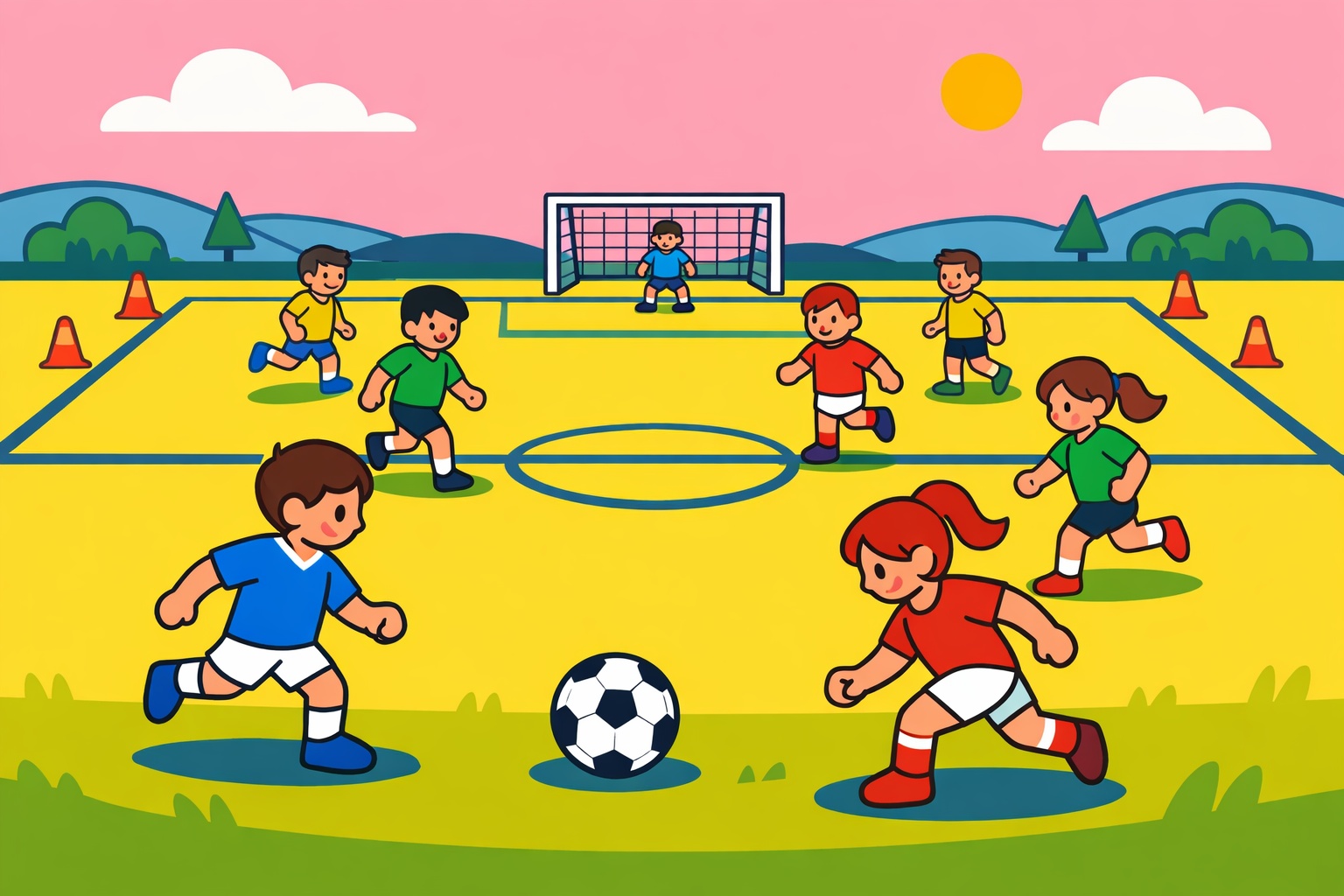
Let the Game Teach
I’ve had to learn this the hard way: if I try to coach every moment, players don’t learn the game—they learn me. Things might look cleaner for a few minutes, but when match day comes and my voice disappears, so does their confidence.
What works better is designing practices where the game provides the feedback. My job is to set the conditions, keep the standards, and guide with a light touch—especially in soccer, where the next decision comes fast and the best teachers are repetition and pressure.
💬 Coach’s Tip: If I’m talking more than the ball is rolling, I’m probably stealing learning.
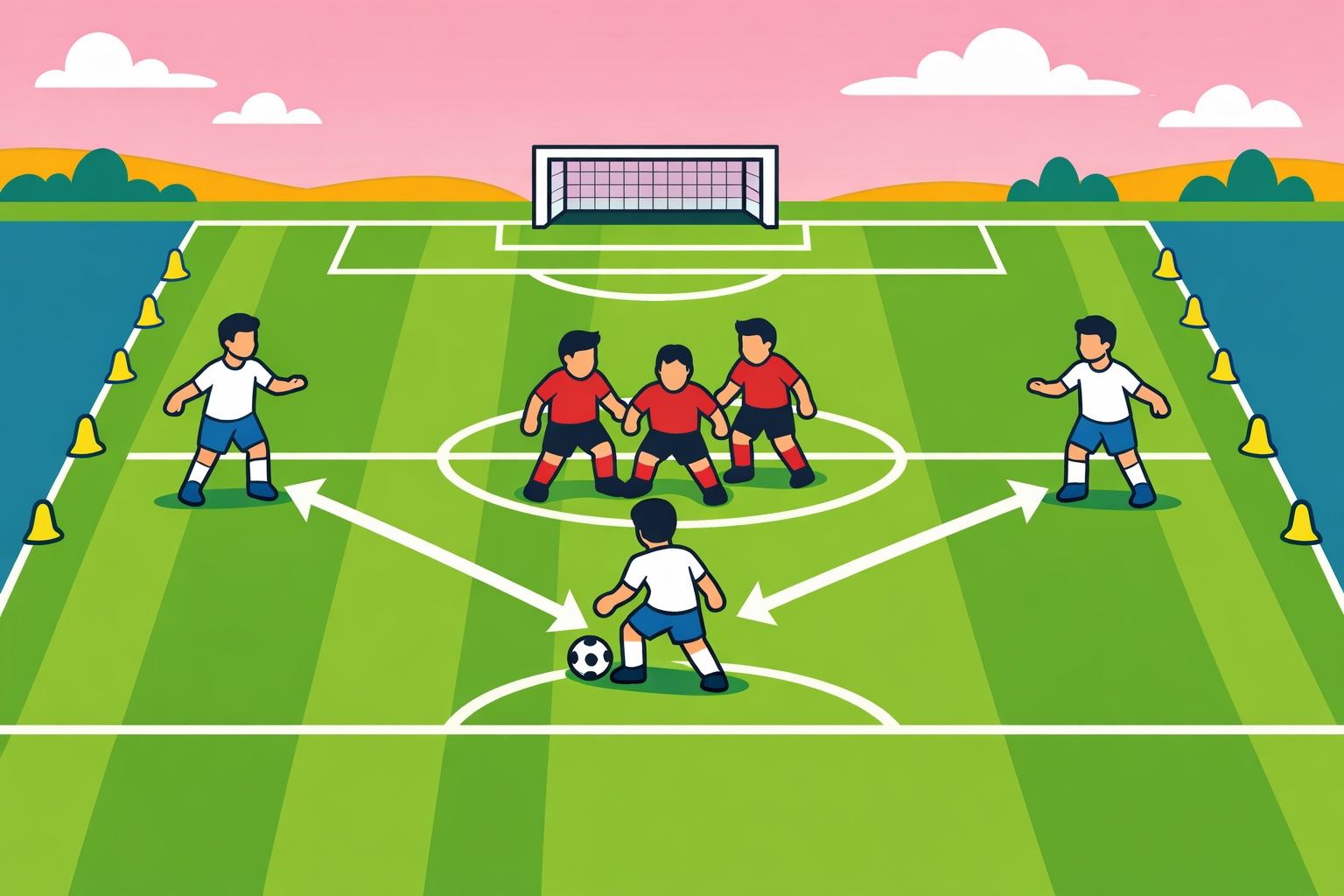
The first shift is simple: stop relying on speeches and start relying on rules that reward the behavior you want. Instead of stopping play to say “use width,” I’ll add a scoring condition that forces the lesson:
A goal only counts if the team uses a wide player during the attack
A goal counts extra if the final pass comes from a wide channel
Bonus point for switching the ball from one side to the other before scoring
Players don’t need a long explanation. Once they feel how width stretches defenders and opens passing lanes, they start choosing it on their own.
From there, I’ll use constraints to shape decisions without scripting them. This is where a lot of coaches overdo it. “Two-touch” can help, but it can also punish the exact players who need time to settle, scan, and build confidence. I’d rather target a constraint so it teaches without turning into a frustration machine.
For example, instead of “two-touch everywhere,” I might do:
Two-touch only in the middle third (where decisions need to be faster)
A time bonus after winning the ball (score within 6 seconds = extra point)
Those small tweaks create urgency where you want it and freedom where you need it.
💬 Try This: Before you correct, adjust one lever—space, numbers, or scoring—and let the players try again.
Another key shift is when I talk. I don’t like coaching in the middle of a decision—that usually slows the game down and makes players second-guess. Instead, I let the moment play out, then I coach the next rep.
During natural pauses—ball out, quick reset, water break—I’ll use short questions that help players read what the game just taught them:
“What did you see?”
“Where was the space?”
“What was the simplest option?”
If the answer is fuzzy, I don’t turn it into a debate. I keep it practical: “Show me on the next rep.” Players learn faster when they can do the correction instead of just hearing about it.
That also means I let mistakes breathe—within reason. In the right small-sided game, a risky dribble in the middle gets punished immediately: turnover, counterattack, recovery run. That consequence teaches faster than a lecture ever will. Then I give one clear cue for the next rep (not five): “Scan early,” or “First touch away from pressure,” or “Find the easy pass first.”
One of my favorite ways to see whether learning is truly happening is a short “silent stretch”—three to five minutes where I say almost nothing and just watch. It’s honest coaching. I learn who communicates without prompting, who supports after they pass, who keeps moving when they don’t get the ball, and who tends to disappear when the game gets hard.
And I always notice what breaks first:
Spacing (everyone drifts to the ball)
Decision-making (forced passes, panic clears)
Effort (players stop reacting after mistakes)
That silent window tells me what to address next—which keeps me from over-coaching the wrong thing.
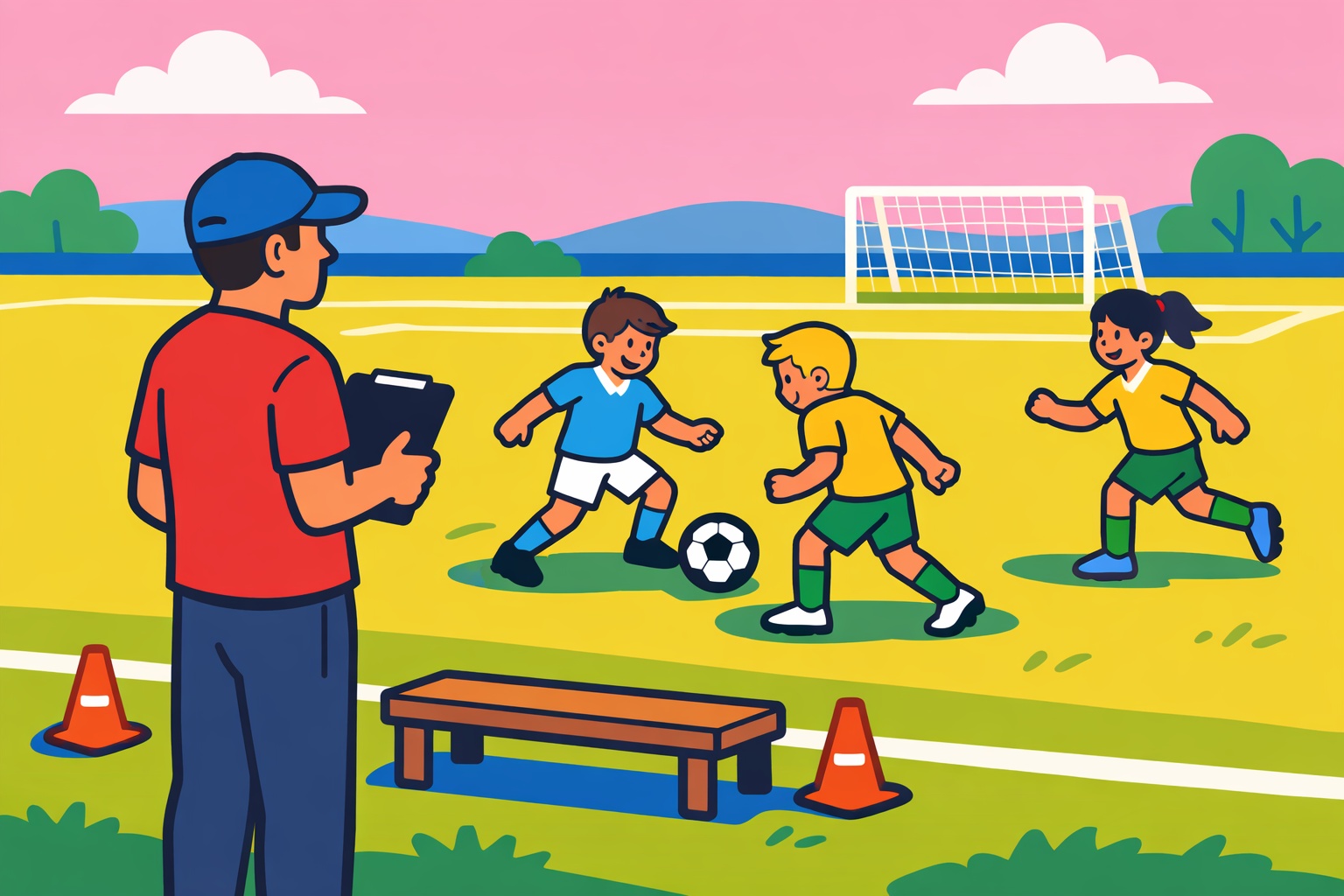
💬 Coach’s Tip: Coach principles, not scripts. If players learn “create space” and “support the ball,” they’ll solve more problems than any choreographed pattern can.
This is where “automatic feedback” games shine—activities where players can tell what’s working without me narrating every rep. The simplest idea is: make the next moment matter. When they win the ball, the rules should invite an immediate attack. When they lose it, the game should demand an immediate defensive response. When they keep good spacing, passing gets easier and chances appear. When they bunch up, everything gets crowded and hard. The players don’t need a lecture—they feel the difference.
On the planning side, I often use the Coach Blitz Drill Library as a starting point for small-sided soccer games. Then I’ll tweak the space, numbers, or scoring rules so the game teaches what my team needs that day—width, scanning, transitions, composure. Coach Blitz helps me stay organized, but the real value is speed: I can grab a solid activity and turn it into the right teacher for the moment, which frees me up to observe, adjust, and intervene less.
💬 Coach’s Rule: My voice should be a seasoning, not the main ingredient.
At the end of the day, I still teach. I still correct. I still hold standards for effort, attitude, and teamwork. But I try not to become the main character of the session. When players learn through the game, they leave practice more independent—and when that happens, soccer gets simpler, faster, and a lot more fun.
— The Coach